
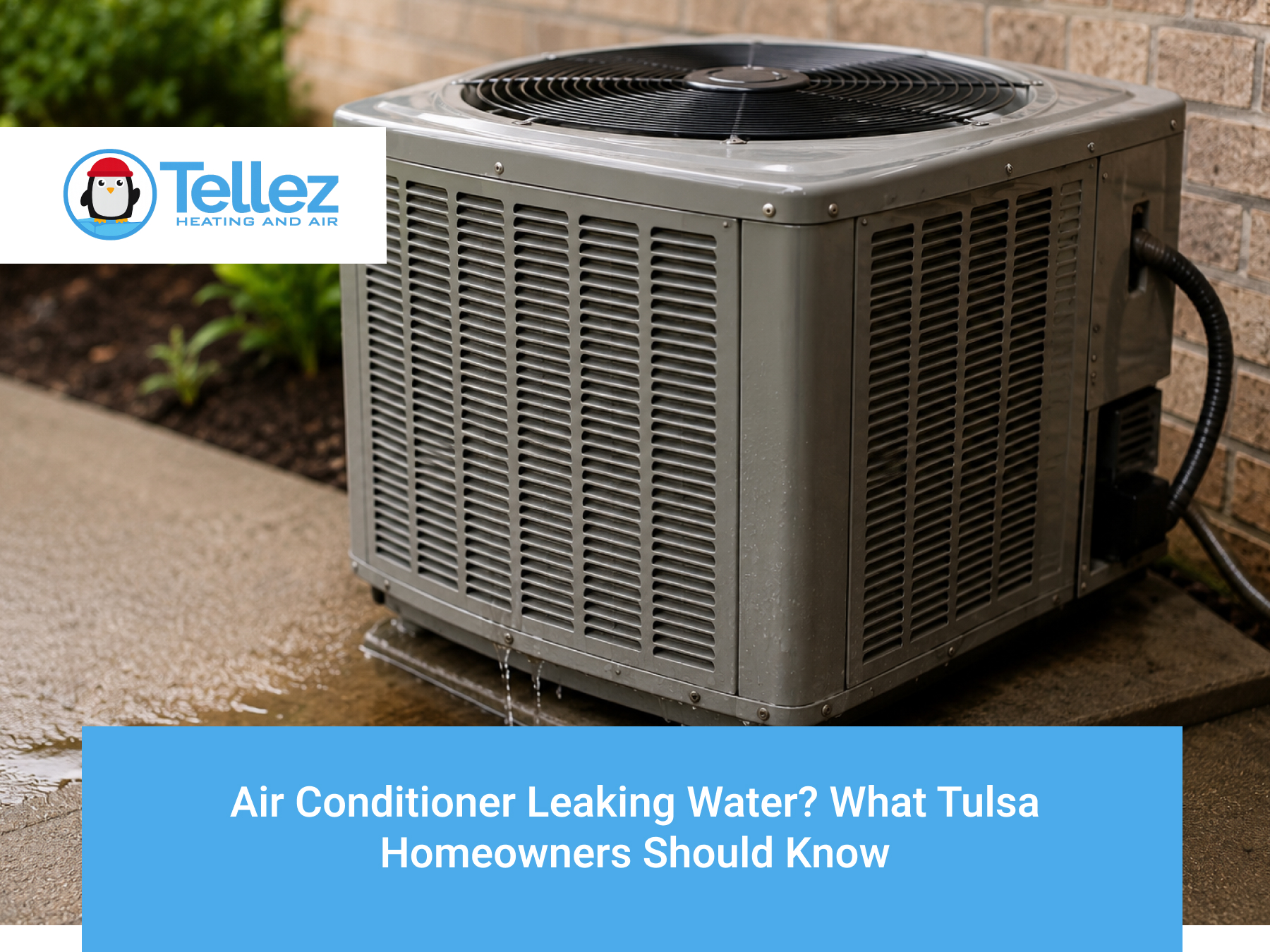
The Unwelcome Indoor Puddle
It is a typical, muggy August afternoon in Green Country. The Oklahoma humidity is hovering around 75%, and you are incredibly thankful for the cool, conditioned air circulating through your Jenks home. But as you walk down the hallway past your utility closet—or perhaps head up to the attic to grab a box—you step into something cold and wet.
You look down and see a growing puddle of water spreading across your hardwood floors or soaking into your ceiling drywall. Panic instantly sets in. You trace the water back to its source and realize it is pouring directly out of your indoor HVAC unit.
Discovering your air conditioner leaking water inside your house is one of the most alarming maintenance emergencies a homeowner can face. Unlike a system that simply stops blowing cold air, a leaking AC introduces a secondary, highly destructive element into your home: uncontrolled water.
At Tellez Heating and Air, our family has been serving Tulsa Midtown, South Tulsa, Broken Arrow, Owasso, Coweta, and Bixby since 2008. Over our 30 years of combined industry experience, we have responded to hundreds of frantic calls about indoor flooding caused by cooling systems. We know that when water is involved, the clock is ticking.
In this comprehensive guide, we will break down the science of why your AC creates water, the top homeowner anxieties surrounding this issue, the most common causes of a leak, and the immediate steps you must take to protect your home.
Addressing the Top 5 Homeowner Pain Points
An AC unit leaking water triggers a unique set of high-stress anxieties. Before we dive into the mechanical causes, let’s address the immediate pain points that keep homeowners up at night:
1. The Threat of Massive Structural Damage
- The Pain Point: Water destroys homes quickly. A leak in an attic unit can collapse a living room ceiling, while a first-floor leak can warp expensive hardwood floors and ruin baseboards.
- The Solution: The moment you spot a leak, turning the AC off at the thermostat halts the production of new water. Fast, same-day professional service is critical to preventing thousands of dollars in structural repairs.
2. The Fear of Toxic Mold and Mildew
- The Pain Point: In the dark, warm, and humid environment of an Oklahoma utility closet, standing water becomes a breeding ground for black mold within 24 to 48 hours. This poses a massive respiratory risk to your family.
- The Solution: A professional HVAC repair doesn’t just stop the leak; it includes treating the drainage system with algaecides to kill biological growth and protect your indoor air quality.
3. “Is my entire air conditioner ruined?”
- The Pain Point: Homeowners often assume that a unit leaking water means the machinery itself has suffered a catastrophic, unrepairable failure.
- The Solution: Take a deep breath! More than 80% of indoor water leaks are caused by a simple plumbing issue (like a clogged drain pipe), not a dead air conditioner. It is usually a highly affordable fix.
4. The Dread of Hidden Fees
- The Pain Point: Calling an emergency technician often comes with the fear of being price-gouged while you are vulnerable and desperate to save your floors.
- The Solution: Tellez Heating and Air eliminates this fear by providing free estimates and upfront pricing. You will know exactly what the job costs before we lift a single tool.
5. “I don’t know who to trust.”
- The Pain Point: You need someone at your house now, but you don’t want to hire a fly-by-night contractor who might do a sloppy job.
- The Solution: We provide photo evidence of our work. We will show you exactly where the clog or crack is located, ensuring complete transparency and peace of mind.
The Science: Why Does an AC Create Water Anyway?
To understand the leak, you have to understand the process. Your air conditioner does two things: it lowers the temperature, and it drastically lowers the humidity.
Inside your indoor unit is an evaporator coil filled with super-chilled refrigerant. As warm, humid Oklahoma air blows over this freezing coil, the moisture in the air condenses into liquid water—exactly like the water droplets that form on the outside of a cold glass of iced tea on a summer day.
On a humid Tulsa afternoon, a residential AC unit can extract anywhere from 5 to 20 gallons of water a dayfrom your home’s air!
Normally, this water drips safely into a drain pan beneath the coil and flows outside through a white PVC pipe called the condensate drain line. When you have an air conditioner leaking water, it simply means this drainage system has failed.
4 Common Reasons Your Air Conditioner is Leaking Water
If water is pooling around your indoor unit, one of these four culprits is almost certainly to blame:
1. A Clogged Condensate Drain Line (The #1 Culprit)
Because the drain line is constantly wet, dark, and exposed to dust from the air, it is the perfect environment for algae, mold, and thick sludge to grow. Over time, this biological buildup creates a massive blockage inside the PVC pipe. When the water can no longer flow outside, it backs up into the drain pan and overflows right onto your floor.
2. A Cracked or Rusted Drain Pan
Older HVAC units (typically 10-15 years old) feature metal or older plastic drain pans sitting directly beneath the evaporator coil. After years of holding standing water, a metal pan can rust completely through, while a plastic pan can become brittle and crack. If the pan is compromised, the water drips straight through the bottom of the unit.
3. A Frozen Evaporator Coil
If you pull off the front panel of your unit and see a giant block of solid ice, your system is frozen. This is usually caused by a severely clogged air filter or a low refrigerant (Freon) leak. When that massive block of ice eventually begins to melt, it generates water much faster than the small drain pan can handle, resulting in a sudden flood.
4. A Broken Condensate Pump
If your indoor unit is located in a basement or an interior closet where gravity cannot carry the water outside, your system uses a small mechanical condensate pump to actively push the water up and out of the house. If this motorized pump fails or burns out, the water has nowhere to go but all over your floor.
Quick Diagnostic Reference Guide
| What You Observe | The Most Likely Cause | The Immediate Action |
| Water overflowing from a full pan | Clogged PVC drain line | Turn AC OFF; use a wet vac to clear pan. |
| Ice visible on the indoor copper pipes | Dirty filter or refrigerant leak | Turn AC OFF to thaw; change filter. |
| Water leaking from underneath the unit | Cracked or rusted drain pan | Turn AC OFF; call for professional replacement. |
| Pump is silent, but water is overflowing | Broken condensate pump | Turn AC OFF; requires electrical pump replacement. |
Your Emergency DIY Troubleshooting Checklist
If you discover a puddle, you need to act fast. Follow this safe, 4-step checklist to mitigate the damage before the professionals arrive:
- Turn the System OFF Immediately: Go to your thermostat and switch it from “COOL” to “OFF.” This stops the condensation process and prevents any new water from forming.
- Clean Up the Mess: Grab heavy towels or a wet/dry shop vacuum and soak up as much standing water as possible to protect your drywall and flooring from permanent warping and rot.
- Inspect the Air Filter: Pull out your indoor air filter. Is it caked in a thick layer of dust? A suffocated filter causes the system to freeze over and leak. If it is dirty, replace it immediately.
- Locate the Drain Line (Optional): If you are handy, locate the white PVC pipe exiting your indoor unit. Many have a small vertical cap you can pull off. You can pour a quarter-cup of plain white vinegar down this access point to help loosen mild algae clogs (never use bleach, which can degrade the plastic and metal over time).
Expert Advice from Tellez Heating and Air:
“If you own a shop vac, you can take it outside to the end of the white PVC drain pipe and suck the clog out from the exterior of the house! However, if the clog is deep or stubborn, high-pressure professional tools are required to clear the line safely without cracking the pipe.”
When to Call the Tulsa HVAC Professionals
While changing a filter or cleaning up a puddle is easy, a stubborn drain line clog, a rusted pan, or a frozen coil requiring a refrigerant recharge are jobs strictly for licensed professionals. Attempting to pry open the unit to fix a rusted pan or handle refrigerants without certification can result in severe system damage or personal injury.
When you need rapid relief from an indoor leak, you need a contractor who prioritizes your emergency.
Experience the 5-Star Tellez Difference
When you search for help with an air conditioner leaking water, you need a team that acts fast, respects your home, and guarantees their work. At Tellez Heating and Air, we operate under a strict commitment to our neighbors:
- Available When You Need Us: Water damage doesn’t wait for Monday morning. We are open 7 days a week, from 8 AM to 5 PM, ensuring we are there to protect your home when disaster strikes.
- Total Transparency: We provide photo evidence of our work. We will show you the cracked pan, the massive clog, or the frozen coil on our tablet so you know exactly what you are paying for.
- Risk-Free Diagnostics: We offer free estimates before any major repairs are done. No hidden diagnostic fees, no high-pressure sales.
- Financial Flexibility: If a leak resulted from a catastrophic system failure, we offer financing available to help you manage the cost of a replacement comfortably.
- 100% Satisfaction Guarantee: We boast an all 5-star Google review rating because we do the job right the first time, every time.
- Proactive Protection: Join our maintenance family and instantly receive a 20% maintenance discount. Our routine tune-ups include flushing your drain line, virtually eliminating the risk of future indoor leaks!
Stop the Leak and Protect Your Home Today
You don’t have to watch your ceiling or floors get ruined by a malfunctioning HVAC system. Remember: turn the system off immediately, dry the area, and let our family restore your system safely and affordably.
Call Tellez Heating and Air today at (918) 809-2017 or email us at tellezhvacnj@gmail.com to schedule your free estimate. Let us show you what rapid, honest, 5-star service truly looks like!